M-NCPPC Archaeology
The Archaeology Office inspires the stewardship of our natural and cultural resources by providing unique opportunities to experience a tangible connection to our shared past through the science of archaeology.
More information coming soon!
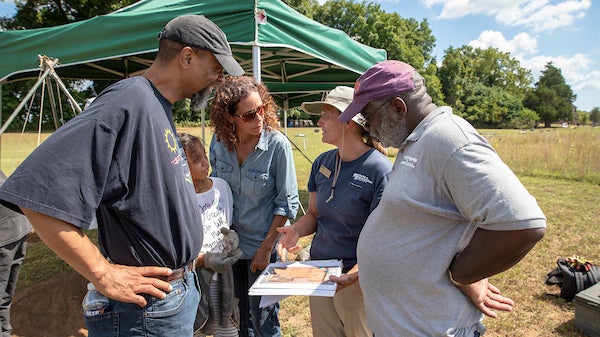
M-NCPPC Parks and Recreation has strict guidelines on the discovery of artifacts on park land. These rules are in place to preserve the integrity of archaeological sites and maintain the provenience of cultural objects. Archaeology is a destructive science, and once an artifact is removed from its original location, we lose a lot of information. The area where an artifact is found can reveal details about who the artifact was used by, how the artifact was used, and when it was used.
If you find something you believe is an archaeological artifact while exploring the parks, please leave it in place and contact the NHRD Archaeology office at 301-627-1286 or archaeology@pgparks.com.
By working together, we can preserve information about our county’s past and ensure the information is available for as many people as possible for generations to come.
Use of metal detectors and any digging is prohibited on Park properties as outlined in Chapter 4, Section 17 of the M-NCPPC Park Rules and Regulations.
Additionally, removal of fossils, archaeological, or cultural artifacts from Park Property is prohibited as outlined in Chapter 4, Section 21 of the Park Rules and Regulations.
Metal Detecting Callout
Metal Detectors, Digging No person shall use a metal detector or dig into the surface of Park Property, except as authorized by Permit.
M-NCPPC Rules and Regulations Section 17
Archaeological and Cultural Artifacts, Fossils No person shall remove fossils, archaeological, or cultural artifacts from Park Property, including projectile points, historic bottles, historic coins, and war relics, except as authorized by Permit.
M-NCPPC Rules and Regulations Section 21
The Archaeology Office inspires the stewardship of our natural and cultural resources by providing unique opportunities to experience a tangible connection to our shared past through the science of archaeology.
Echoes of the Enslaved is an annual event organized and sponsored by the Archaeology Office that seeks to address and explore the legacy of chattel slavery in Prince George’s County. The event rotates to different Parks and Recreations historic sites each year and focuses on the themes and research central to the host site. Holding the event at different sites allows the central theme to be interpreted through different lenses each year, deepening our understanding of the legacy of slavery and the invaluable role archaeology holds in understanding our past.
The structure of the event also varies from year to year, and may include interactive panel discussions, moderated fireside conversation circles, overnight stays, and public archaeological excavations. Although things may look a little different each year, what remains the same is the dedication to an interactive, collaborative, and interdisciplinary event for the residents of Prince George’s County.
2019 – “A Legacy of Enslavement”
The inaugural Echoes of the Enslaved event was held in 2019 at Mount Calvert. The goal of the two-day event was to discuss the lasting legacies of enslavement and to unpack how learning from the past can help us move into the future. This event established many standards for later Echoes events, including panel discussions that prioritize attendant participation, collaboration with Joseph McGill and the Slave Dwelling Project, and a commitment to highlighting the important role archaeology plays in understanding the legacies of enslavement.
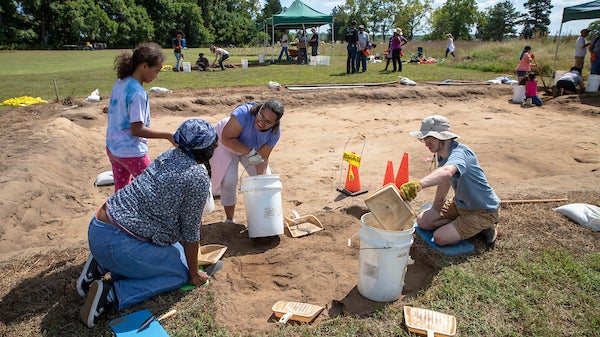
The 2019 Echoes of the Enslaved event included three main components over a two-day time period. The first day included a panel discussion that addressed the question, “How does reflecting on a history of enslavement in Maryland help up tackle modern issues?” This question was explored by the panel experts – Dr. Rashawn Ray, Dr. Jason Nichols, Dr. Kay Wright Lewis, Dr. Kristen Montaperto, and Joseph McGill – and then followed up by fireside conversation circles with the audience, ensuring a wide range of voices and viewpoints were heard. The next portion involved camping overnight in the fields of Mount Calvert where enslaved families once lived. This spatial connection to people of the past facilitates a deeper connection to history and is a key component in the Slave Dwelling Project’s work. The final aspect of the event was a public archaeological Dig Day that took place the following morning. Members of the public were able to participate in an excavation alongside professional archaeologists, giving them the opportunity to gain a first-hand understanding of how archaeology expands our understanding of the past.
2020 – “Legacies of Enslavement and Colonialism”
The second annual Echoes of the Enslaved event took place in 2020 with a focus on the Legacies of Enslavement and Colonialism. The ongoing pandemic altered the format of the event from the original 2019 event, but great care and effort was taken to replicate some of the previous successes while ensuring public health and safety. Once again a two-day event, Montpelier Historic Site in Laurel hosted two virtual conversation circles. Each conversation circle included a small, in-person component with two discussion moderators while the audience participated virtually.
The first conversation circle was moderated by Joseph McGill of the Salve Dwelling Project and M-NCPPC public Historian Marvin-Alonzo. This discussion focused on the Legacies of Enslavement. The second circle was also moderated by McGill, but this time focused on the Legacies of Colonialism alongside co-moderator Rico Newman, a Piscataway Indian Elder.
2021 – “The Pursuit of Liberty”
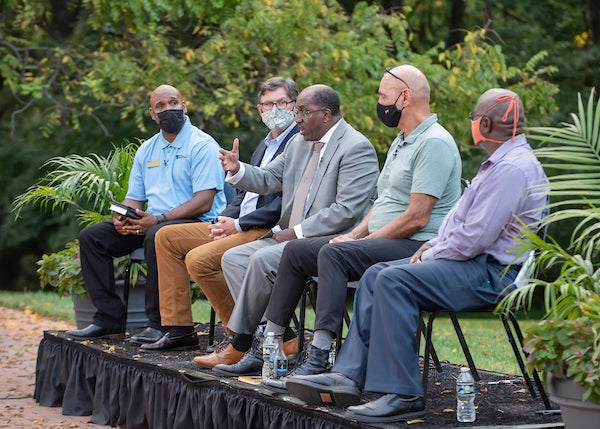
The 2021 Echoes of the Enslaved event focused on the theme of the Pursuit of Liberty. Held on the 20th anniversary on the 9/11 attacks, the two-day event engaged in conversations about the legacies of slavery, the pursuit of civil rights, and the perpetually changing landscapes around us. This event returned to the formula set by the 2019 Echoes event, including conversation circles that encouraged attendant participation, partnership with the Slave Dwelling Project, an overnight campout, and a public archaeological experience.
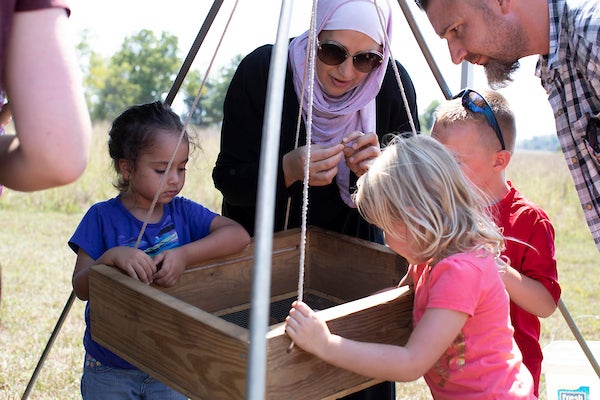
This third installment of the Echoes of the Enslaved series was held at Marietta House Museum and included a series of micro-documentaries about Marietta and grappling with difficult histories. The documentaries were released before the event to provide context for the in-person events. The event itself started with a town hall featuring Joseph McGill of the Slave Dwelling Project, followed by in-person conversation circles and an overnight campout. The second day of the event began with a live-streamed performance by the Washington Revels Jubilee Voices ensemble to celebrate the enslaved community of Marietta and commemorate the people who were lost in the Twin Towers, at the Pentagon, and on Flight 93. This was followed by an in-person public archaeology experience where participants processed artifacts that were discovered in the areas where enslaved families once lived.
2022 – “Descendants, Genealogy, and Wellness”
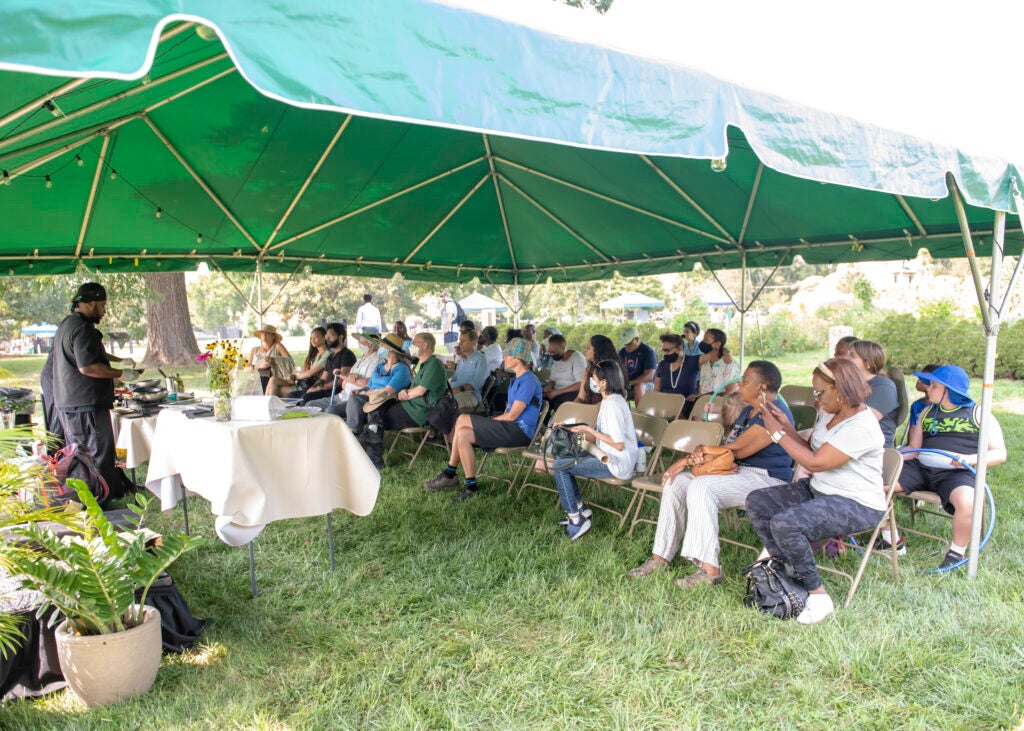
In 2022, the fourth annual Echoes of the Enslaved event focused on the themes of health, wellness, and genealogy and was held at Riversdale House Museum. Collaboration with Joseph McGill and the Slave Dwelling Project remained a central and important aspect of the event. The first day of the event was focused on “Conversation,” and the collaborative nature of the day extended to descendants invited to participate in the event. The discussion panel for this year’s event included Tina Wyatt, a descendant of Harriet Tubman; Rev. Jerome Plummer-Fowler, a descendant of an individual enslaved at Riversdale; and Dr. Joan M. E. Gaither, a documentary story quilter. Following the panel discussion were fireside conversation circles where attendees were encouraged to participate.
The second day of the event focused on “Celebration,” honoring enslaved ancestors with a day of family history, wellness, and community engagement. This day sought to foster a festival-like atmosphere with musical performances by the Washington Revels Jubilee Voices, food, and connection. The event also featured an archaeological dig open to the public. This year’s excavation was a compliance project, ensuring no cultural remains would be harmed when new compost bins were added to the garden.
2023 – “Freedom, Resistance, and the Right to Vote”
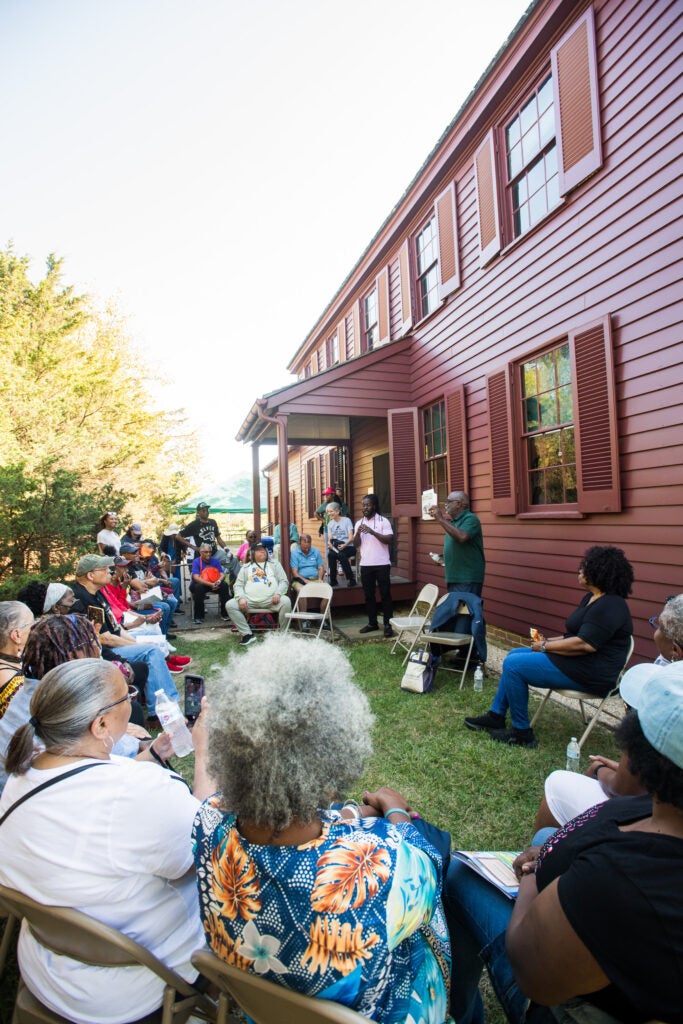
The year 2023 marked the fifth annual Echoes of the Enslaved event. This year the main event was limited to one day but was accompanied by several other days of related events. The main day of events featured a block party to kick things off, with a DJ, artists demonstrating African music and dance traditions, local vendors, and tours of the Surratt House Museum. The next event was a forum with emphasis on freedom, resistance, and the right to vote. The forum was led by a panel of experts comprised of Valerie Johnson, professor and author of Black Power in the Suburbs; Mia Carey, archaeologist and inclusion, equity, belonging, and mattering consultant; Joseph McGill, founder of the Slave Dwelling Project and author of Sleeping with the Ancestors; Janna Parker, deputy executive director of PG ChangeMakers; and Qiana Johnson, founder of Life After Release. The day concluded with fireside conversation circles.
The other companion events included a book discussion with Joseph McGill and Herb Frazier at the Marietta House Museum about their book Sleeping with the Ancestors: How I Followed the Footprints of Slavery. This event was held a few days before the main Echoes event. Also paired with the main event were two Community Archaeology sessions at the Surrat House Museum. During these three-week, hands-on workshops, professional archaeologists worked with the public to identify and stabilize objects as a way to investigate and preserve our community’s cultural heritage.
2024 – “History in Her Hands”
The sixth annual Echoes of the Enslaved was a one-day event that took place at the Darnall’s Chance House Museum. The event focused on the female perspective of enslavement and featured the unveiling of a new exhibit, “History in Her Hands,” that highlighted the lives of colonial Black women enslaved at Darnall’s Chance. As with previous Echoes events, the 2024 iteration highlighted archaeological research conducted at Darnall’s Chance and the value archaeology holds in understanding the legacies of enslavement.
As a parallel to the new museum exhibit, the evening featured an all-women panel that discussed the dynamic relationships of an 18th-century household and the lasting impacts of enslavement on today’s society. Panelists included Dr. Psyche Williams-Forson, Chair of the Department of American Studies at the University of Maryland; Courtney C. Hobson, Program Manager for the Dresher Center for the Humanities at the University of Maryland, Baltimore County; Macie Clerkley, doctoral student in Anthropology at Brown University and former M-NCPPC archaeologist; and Dr. Patricia Samford, director of the Maryland Archaeological Conservation Lab at Jefferson Patterson Park and Museum. The event ended with the signature fireside chats, where attendees were able to continue conversations and expand on experiences and perspectives gained during the day.
2025….
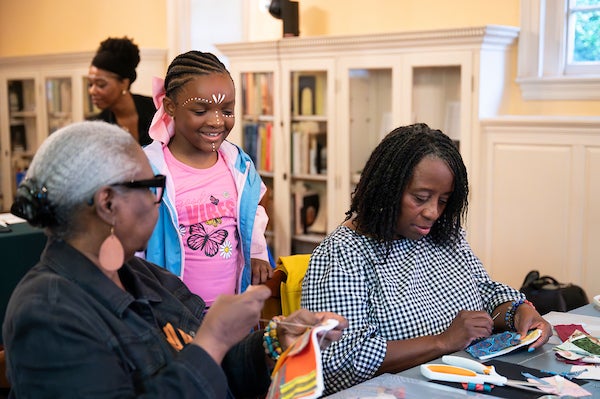
The most recent installment of Echoes of the Enslaved was hosted by Montpelier House Museum, a manor house constructed in 1783 and originally set on 9,000 acres of plantation land. On this plantation, 169 enslaved individuals lived and worked in the fields, ironworks, and home.
This year’s gathering sought to honor these very individuals who, despite the attempt to erase their cultures, subversively passed ancestral knowledge to future generations to keep traditions alive. Archaeologists and historians collaborated to showcase local artisans who practice their ancestors’ artistic legacies via mini-workshops, exhibits, and artisan demonstrations. By engaging with this past, Echoes of the Enslaved aimed to honor these histories and create a space of reflection and community for the attendees.
Cherry Hill
Cherry Hill Cemetery is an African American family burial ground originally part of Josiah Adams’ family farm. Prior to Emancipation, records indicate that Adams was a freedman working at the Calvert family’s Riversdale plantation. In 1871, he purchased 49.5 acres that would become his family farm, where he would live until his death in 1884. After his death, Adams’ will instructed that part of his land be used as a burial place for him and his family. The farm remained in his family until 1930, and the cemetery was utilized by the Adams family as well as other African American families in the Riverdale-Bladensburg-Hyattsville area, including the Beckett and Plummer families.
The preservation of the Cherry Hill cemetery is a joint effort between the Department of Parks and Recreation’s Archaeology Office and the community surrounding the burial ground. Members of the Riverdale-Bladensburg-Hyattsville community provided oral histories, records, and other forms of evidence that enabled archaeologists to create ways to help preserve this important history. Cherry Hill is a great example of non-destructive archaeological techniques that are deeply important to conservation and preservation.
Northhampton Historic Site
Once a 1000-acre plantation, Northampton Historic Site is now two parcels of land totaling 12.6 acres that are surrounded by residential development. The small, forested area off Water Port Court encompasses the remains of two slave cabins. The remains of the mansion and several outbuildings – including a tobacco barn and an icehouse – are within a twelve-acre parcel northwest of the neighborhood.
The original 1000-acre tract of land was patented to Thomas Sprigg in 1673 and the original plantation house was constructed by his son some time before 1704.
Council for Maryland Archaeology
The Council for Maryland Archaeology (CfMA) is a professional organization dedicated to archaeology in Maryland. Their mission includes encouraging public awareness and interest in archaeology, furthering the research, preservation, and management of archaeological resources, and upholding ethical and research standards for Maryland archaeology. Explore the CfMA website for information about Maryland Archaeology month, volunteer opportunities across the state, membership information, and updates on Council undertakings.
Maryland Historical Trust
The Maryland Historical Trust is the state agency responsible for preserving and interpreting the legacy of Maryland’s past. The MHT is part of the Maryland Department of Planning and acts as the State Historic Preservation Office (SHPO) in accordance with the National Historic Preservation Act of 1966. The central goal of the Maryland Historical Trust is to assist the people of Maryland in understanding their cultural and historical heritage through research, conservation, and education. Their website includes resources for research, information about grants and awards, details about current projects, and much more.
MDFinds
MDFinds is an application developed by Maryland Historical Trust archaeologists to track unanticipated artifact finds in the field. This app is meant to supplement the standard Maryland Inventory of Historic Properties (MIHP) Archaeological Site Form and should be used for isolated artifact finds rather than for reporting new sites. The idea behind this app is that anyone who encounters unexpected artifacts in Maryland can record pictures and locations – weather you’re a professional archaeologist, property owner, or just out hiking.
Diagnostic Artifacts of Maryland
The Maryland Archaeological Conservation Laboratory created this site as an introduction to datable artifacts that are found in Maryland. The guide focuses on some of the most significant and common types of artifacts that have been recovered in the state, creating a centralized tool for professional and avocational archaeologists alike. Use this tool to recognize objects typically found in Maryland and become familiar with descriptive terms commonly used in Maryland archaeology.
M-NCPPC Archaeology
301-627-1286